
Industrial Uniform Fabric Guide: Choosing the Right Material for Your Employees
Introduction
The fabric to be used for industrial uniforms is a crucial matter. For most occupations, the employee is exposed to rough handling, heavy loads, and sometimes quite worse environmental conditions. Therefore, the fabric of such uniforms must be strong, comfortable, and protective so that your staff remains safe and effective. Whether you are dressing a team of construction workers, factory employees, or engineers, the perfect material for your industrial work uniforms can make all the difference.
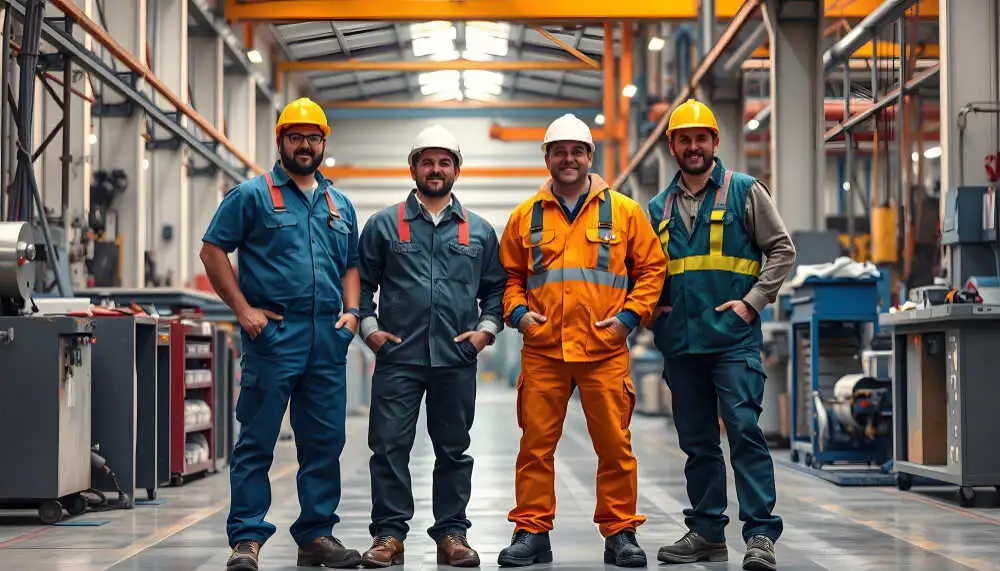
In this guide, we walk you through the essential factors that need to be considered in the process of selecting fabric for industrial uniforms and how you can pick the best one of those presented for your workforce needs.
Importance of Choosing the Right Fabric for Industrial Uniforms
The primary purpose of industrial uniforms is to protect workers and at the same time offer comfort while ensuring that workers are dressed correctly for work. A bad choice of fabric may cause discomfort, reduced performance, and safety risks. Here are a few key reasons why you need the right material:
Durability: The industrial industries hold much strenuous physical activity, chemicals, dust, and harsh climatic conditions. For wear, the durability of fabric would ensure that it will not get easily torn or lose shape.
Safety: For the workers operating heavy machinery or working at hazardous conditions, the important aspect will be safety. Uniforms made of flame-resistant or chemical-resistant materials could give them extra protection and minimize risks associated with accidents

Comfort: Shifts can be quite long, and the work is so physically demanding that uniforms need to allow for freedom of movement and breathability. Comfortable fabrics assist workers in staying focused on their work without feeling restricted.
Appearance: While functionality takes the bulk of the cake, appearance is also highly important. A uniform that maintains its color and fit for multiple washes maintains its professional look and therefore reinforces the image of a company.
Common Fabrics Used in Industrial Work Uniforms
Different materials serve for different purposes. The right fabric choice will depend on the specific needs of your workforce. Here’s a breakdown of the most commonly used fabrics in industrial work uniforms and their benefits:
Cotton: Cotton is a natural fiber. Worn in most industrial applications, it is breathable and feels great. It absorbs, allowing workers to cool down quickly, and they can remain dry during hot conditions. Pure cotton doesn’t really possess a high durability rating, so it tends to get blended with synthetic fibers to add to its strength.
– Polyester: Polyester is artificial fibers that do not shrink and wrinkle easily. Such a type of fabric is fine for workplaces where uniformed workers have to look the same even after being washed many times. As polyester does not absorb water, it is also resistant to water.
Polyester and Cotton Blends: Polyester and cotton mixed offer the best of both worlds. Blended fabrics are soft, breathable, and comfortable like cotton but retain the durability and wrinkle resistance of polyester. Poly-cotton blends offer versatility in use for industrial uniforms.
Nylon: It is very rugged. Nylon is a strong lightweight fabric that resists abrasion, hence suitable to be used for working men in rugged environments. It dries up fast and resists oil and chemical damage therefore also in great demand in manufacturing and construction.